
Domestic Air Freight in Australia


Written by Mike Clancy
Mike Clancy covers domestic air freight with a clear editorial style shaped by logistics knowledge, cargo movement insight, and a strong focus on practical industry understanding.
Domestic air freight in Australia is built around one simple truth: some cargo cannot wait. When shipments are time-critical, high-value, perishable, or operationally essential, air freight becomes the mode that keeps supply chains moving across long distances and uneven geography. The Australian Government describes air freight as an important part of the national freight task and notes that it is commonly used for high-value and time-critical goods such as parcels, seafood, and medical supplies.
That is why domestic air freight should not be reduced to the phrase “fast shipping.” In practice, it is a coordinated system that sits between airport infrastructure, airline capacity, cargo handling, freight documentation, safety controls, and route planning. IATA’s cargo handling guidance frames air cargo as a structured process that starts with booking and planning, moves through acceptance and handling, and ends with delivery and proof of delivery.
Why domestic air freight matters in Australia
Australia’s freight geography gives air transport a specific role. The country’s major cities are far apart, and regional or remote areas can depend on aviation where road access is slow, unreliable, or seasonally disrupted. Government material on air freight states that about 80% of domestic cargo movements occur between the main airports in capital cities, while air freight also plays an important role in supplying regional and remote Australia.
That dual role is what makes the topic commercially and operationally interesting. On one side, domestic air freight serves high-volume interstate links between major airport nodes. On the other, it supports access to essential goods, urgent supplies, and critical continuity for communities and industries outside the strongest surface transport corridors.
What domestic air freight actually includes
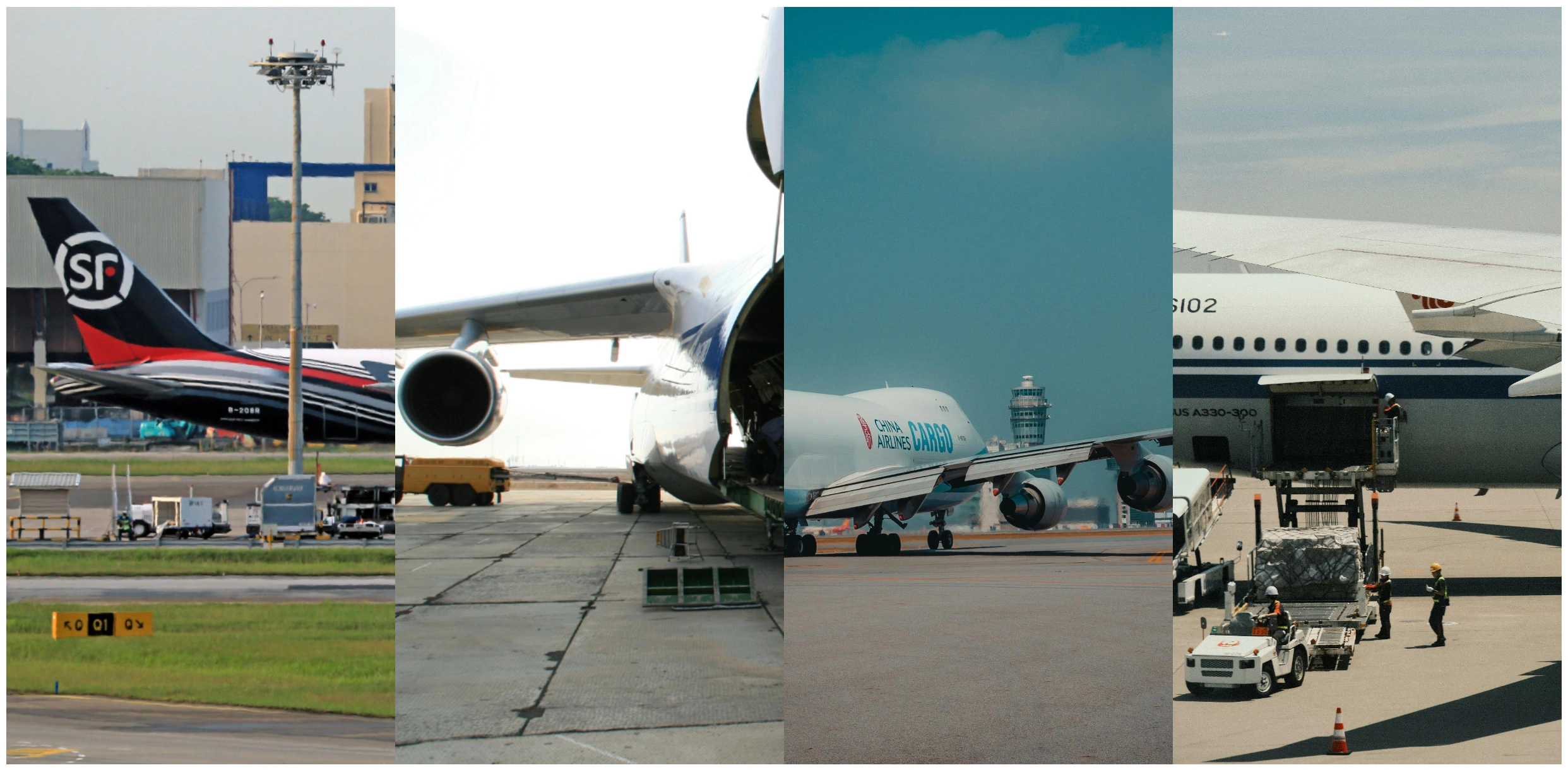
Domestic air freight covers cargo moving by aircraft within Australia, whether through dedicated freighters or space carried in passenger aircraft. It includes interstate cargo flows, airport-to-airport movements, urgent freight, regional supply cargo, special handling shipments, and freight that depends on controlled timing. Airservices Australia has noted that cargo activity is influenced by the growing use of belly-hold capacity on passenger services, which means the domestic air freight network is shaped not only by cargo aircraft, but also by the wider passenger aviation system.
This is why domestic air freight is best understood as a network rather than a single service. A shipment may rely on terminal intake, handling processes, aircraft capacity, and delivery coordination before it ever reaches its destination. The plane is only one part of the chain.
How the system works
At a practical level, domestic air freight starts with booking and shipment planning, then moves into cargo acceptance, terminal processing, load planning, uplift, arrival handling, and release or delivery. IATA describes cargo handling as a step-by-step chain that begins before the shipment leaves the facility and continues until final handover.
That process matters because speed in air freight is not created by flight time alone. It depends on whether the shipment is ready, correctly described, properly packed, accepted on time, and able to move through the cargo terminal without friction. A shipment can miss movement not because the aircraft failed, but because the operational chain around it failed.
Capacity and pricing are inseparable
Most weak freight content talks about rates before it explains capacity. In reality, air freight pricing only makes sense once you understand how scarce aircraft space is allocated. IATA explains that air cargo charges are determined by actual weight or volumetric weight, with the higher figure used as the basis for pricing.
That means domestic air freight is not priced like a simple trucking job. It is priced inside a constrained system where payload, volume, timing, available space, and handling complexity all matter. In Australia, that logic is sharpened by the fact that some freight is carried in passenger belly-hold capacity, so available cargo space can be influenced by broader aviation network conditions.
Documents are part of the operating system
Air freight does not move on physical handling alone. It also moves on information. The most important core document is the Air Waybill, which IATA identifies as the critical cargo document constituting the contract of carriage between shipper and carrier. IATA also explains that e-AWB removes the requirement for a paper AWB and supports a more paperless cargo process.
From there, the document layer expands into operational visibility and completion. MAWB and HAWB matter in consolidated freight structures, manifests matter for shipment control, and proof of delivery matters because the freight chain is not complete until handover is recorded. In other words, documents are not admin clutter. They are part of the control structure that keeps cargo movement clear, traceable, and accountable.
Dangerous goods and safety shape what can enter the system
Domestic air freight is also a safety-filtered system. Some cargo can move only when the relevant dangerous goods requirements are met. CASA’s air freight safety guidance explains that dangerous goods shipped by air must be managed through proper statements, packaging, and safety procedures, and its hazard-label guidance notes that there are nine main dangerous goods classes, including lithium batteries and dry ice within Class 9 miscellaneous dangerous goods.
CASA also states that if a sender or forwarder provides general cargo that might fly, a dangerous goods statement is required, and aircraft operators must refuse to load general cargo if that statement is not made. That is one of the clearest examples of how air freight works: safety compliance is not a side issue added later. It is one of the gates that determines whether cargo enters the network at all.
Which Cargo Types Are Best Suited to Domestic Air Freight
Not all freight belongs on an aircraft. That is one of the most important realities in this topic. Domestic air freight is expensive, capacity-constrained, and selectively used. It makes the most sense where timing, value, sensitivity, or operational consequence justify the premium.
The strongest cargo types for domestic air freight are usually time-sensitive, light, compact, perishable, highly valuable, or operationally critical. That includes medical supplies, pharmaceuticals, seafood, perishables, high-value electronics, urgent retail parcels, and critical spare parts.
Each of those categories makes sense for a different reason. Medical supplies and pharmaceuticals fit because timing, integrity, and controlled handling matter. Seafood and perishables fit because delay destroys freshness, value, and marketability. Spare parts fit because equipment downtime can be more expensive than the transport cost itself. Retail parcels fit when speed, express service, or replenishment timing matters. Mining-related components and industrial parts fit when remote operations or equipment failure turn delay into major commercial loss.
This is the real logic of domestic air freight. It is not mainly about what the goods are called. It is about what happens if they do not move quickly enough.
Routes Matter Because Geography Changes the Role of Freight
A strong pillar page on domestic air freight in Australia must treat route structure seriously. The network is not random, and route importance is not determined only by simple cargo volume.
Major airport nodes such as Melbourne, Sydney, Brisbane, Perth, and Adelaide play an outsized role because domestic cargo is heavily concentrated at those locations. Inter-capital corridors matter because they carry a large share of the interstate freight task and connect major commercial centres, airport cargo terminals, and logistics markets.
But route relevance is broader than the main city network. Regional and remote routes matter because they support resilience, essential goods access, industrial supply continuity, and community connectivity. For some routes, air freight is a premium commercial solution. For others, it is an access solution. That distinction matters.
This is why an Australian domestic air freight website should cover both major interstate lanes and regional connectivity. A page focused only on capital-city corridors would miss one of the most important realities of the Australian market: geography changes the role of freight. On one lane, speed may be the main value. On another, reliability and access may matter more than pure transit time.
Final Thoughts
Domestic air freight in Australia is not just the fast option. It is the selective option, the controlled option, and often the necessary option. It exists where timing, value, perishability, operational continuity, condition sensitivity, documentation accuracy, safety compliance, and route structure make air transport commercially or practically justified.
When those conditions are absent, slower modes usually make more sense. Road freight, rail freight, or sea freight will often be more efficient for low-margin, non-urgent, or bulk cargo. But when the shipment is urgent, valuable, fragile in time, sensitive in condition, or critical to business continuity, domestic air freight becomes one of the most important parts of the Australian logistics system.
That is the right way to frame the topic. Not as generic “fast shipping,” but as a national air cargo network shaped by airport infrastructure, cargo operations, aircraft capacity, freight documents, safety controls, cargo suitability, and Australian geography.
Related Articles
Domestic Air Freight Basics
Learn the core ideas behind domestic air freight in Australia, including air cargo, interstate shipping, airport-to-airport movement, transit time, and priority freight.
Air Freight Documents
Explore the main documents used in air freight, including AWB, e-AWB, MAWB, HAWB, cargo manifests, and proof of delivery.
Dangerous Goods and Safety
Understand the safety rules behind dangerous goods in air freight, including declarations, hazard labels, lithium batteries, dry ice, and cargo refusal risks.
Domestic Air Freight Routes in Australia
Explore how domestic air freight moves across Australia through major city links, regional access routes, and interstate cargo networks.
Air Cargo Operations
Understand how air cargo operations work, from cargo acceptance and load planning to uplift, ground handling, and cargo terminal flow.
Air Freight Capacity and Pricing
Learn how air freight capacity and pricing are shaped by chargeable weight, volumetric weight, payload, belly-hold space, and cut-off times.
Cargo Types and Use Cases
Discover which cargo types are best suited to air freight, from medical supplies and perishables to spare parts, parcels, and critical industrial goods.
© 2026 All Rights Reserved. Daleearnhardtjrjr.com